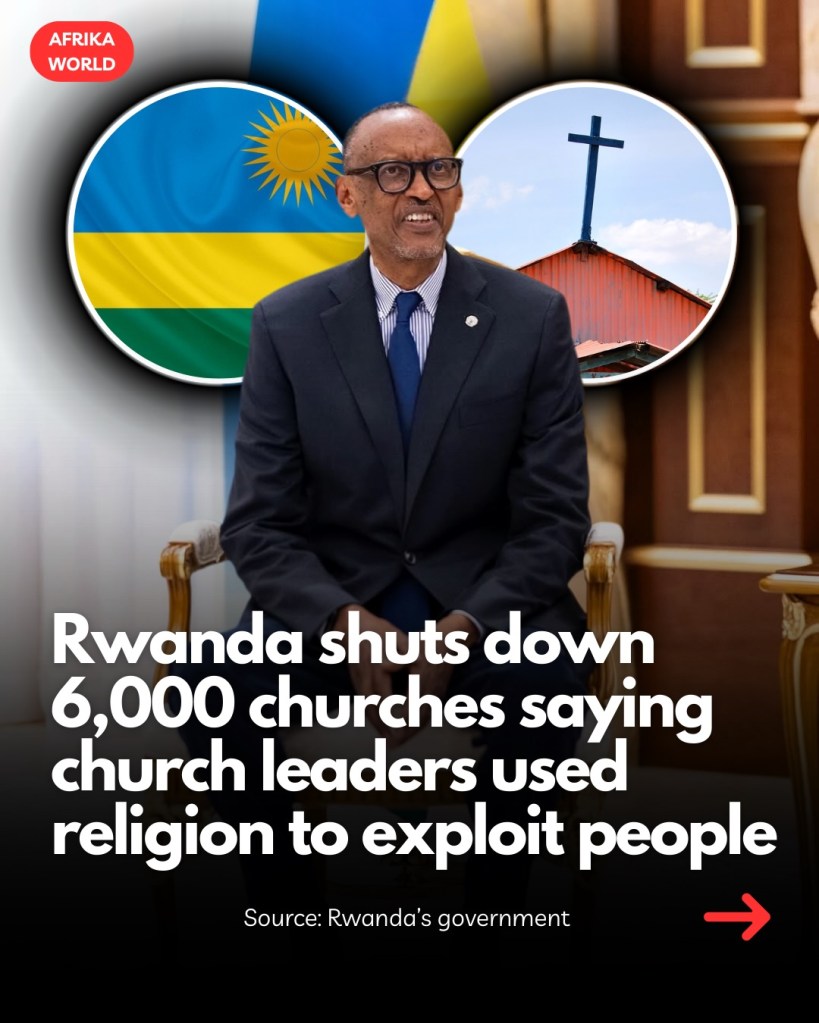
Over the past several years, Rwanda has taken one of the most decisive and controversial, steps on the continent by shutting down more than 6,000 churches. According to Rwandan authorities, these closures were part of reforms aimed at regulating religious institutions that were unregistered, unsafe, or accused of exploiting citizens under the cover of faith.
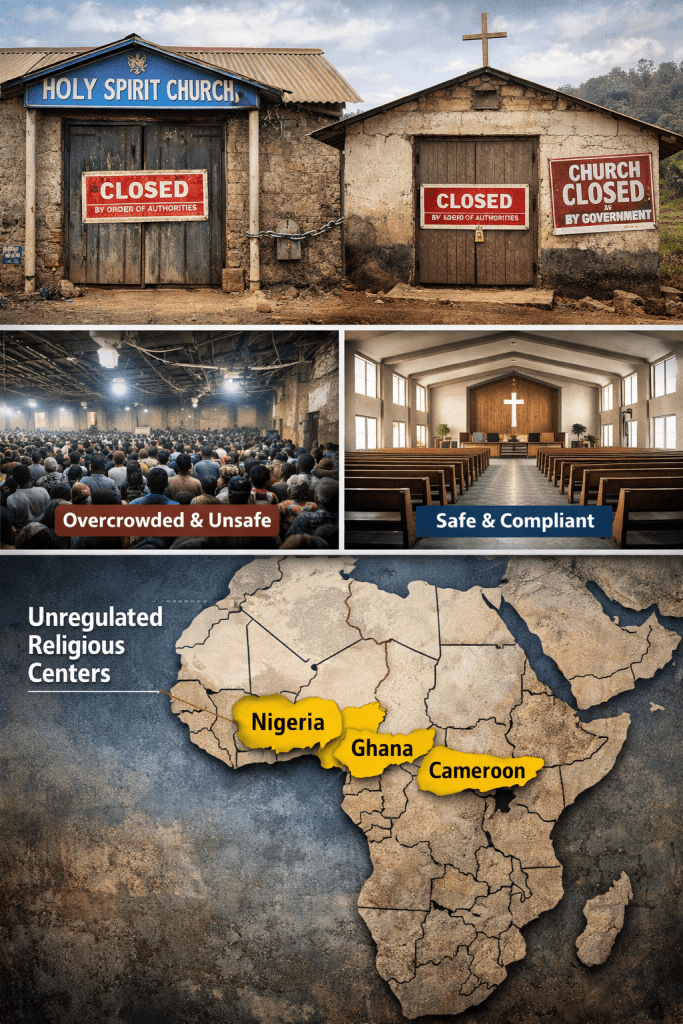
Officials insist the move is not an attack on religion, but a matter of public safety, accountability, and rule of law. Many of the closed worship centers reportedly failed to meet basic health and building standards, while others operated illegally or treated religion as a business rather than a spiritual service.
Faith, Freedom, and Responsibility
Religion plays a powerful role in African societies. It offers hope, community, and moral guidance. But when faith becomes commercialized—when desperate people are manipulated, financially drained, or misled—governments are forced to confront an uncomfortable question: Who protects the people?
Rwanda’s approach has reignited debate across Africa about the balance between religious freedom and state oversight. Supporters argue that regulation is long overdue in a space where abuse often goes unchecked. Critics warn that excessive control risks silencing genuine belief and setting dangerous precedents.
Why Nigeria, Ghana, and Cameroon Must Pay Attention
This conversation is not only about Rwanda.
In Nigeria, the rapid rise of unregulated churches and miracle centers has led to repeated cases of financial exploitation, fake prophecies, and deadly building collapses.
In Ghana, authorities regularly grapple with self-styled prophets who wield enormous influence with little accountability, sometimes promoting dangerous practices in the name of faith.
In Cameroon, where social and economic hardship already weighs heavily on citizens, unregulated religious institutions often thrive in vulnerable communities, with almost no oversight.
These countries—and many others—should take Rwanda’s actions seriously, not as a template for repression, but as a reminder that religion must not operate above the law.
Other African Countries Are Not Left Out
From East Africa to Southern Africa, the issue is widespread. Across the continent, religious spaces are expanding faster than regulation. Weak enforcement, political fear, and cultural sensitivity often allow abuse to flourish unchecked.
Africa does not need less faith—but it does need responsible faith.
The Bigger Question for Africa
The real challenge is not whether governments should regulate religion, but how they do it:
- Can states protect citizens without crushing belief?
- Can regulation stop exploitation while preserving freedom of worship?
- Can faith leaders be held accountable like any other public institution?
Rwanda has chosen a hard path. Whether it is the right one remains debated—but ignoring the problem is no longer an option.
Final Thought
Faith should heal, not harm.
Religion should uplift, not impoverish.
And governments must protect citizens—even when the issue is sensitive.
Africa must confront this reality with courage, wisdom, and balance.
 Africa Must Change | African Youth, Politics & Social Change
Leave a comment