🌾 Wheat, Water, and Policy Missteps: What Oman and Côte d’Ivoire Teach Us
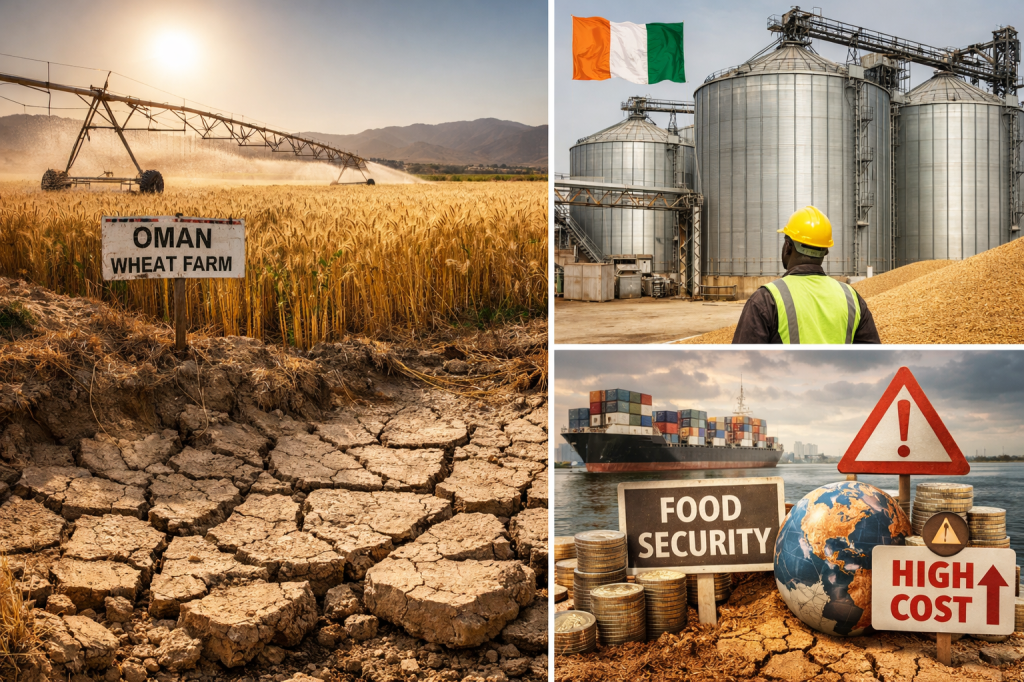
Oman is doubling down on wheat production—but at what cost? Overuse of water resources has reached alarming levels. Last year, wheat output hit 10,128 tonnes across 8,327 acres, with Dhofar contributing 76% of the harvest. The total market value? $7.8 million (OMR 3 million).
Here’s the kicker: the same wheat could be bought on the global market for just $1.67 million—4.7 times cheaper. So why is Oman draining precious water to overpay for “food security”? 💧
Meanwhile, Côte d’Ivoire has been busy building wheat storage silos since the start of the Russia–Ukraine war. On paper, it looks like forward-thinking food security planning. In reality, it exposes a deeper policy flaw.
Having worked in Côte d’Ivoire—not from hotel conferences, but in the field—I know the country can be self-sufficient in wheat. The problem isn’t lack of land or capacity; it’s policy choices. Instead of investing in:
- Irrigation systems 💦
- Seed research 🌱
- Farmer incentives 👩🌾👨🌾
- Mechanisation 🚜
- Efficient logistics 📦
…the state prioritized storage for imported wheat.
This approach creates a contradiction: silos assume permanent dependence on external suppliers, often from geopolitically unstable regions. Storage buffers short-term shocks—it does not solve long-term vulnerability.
The Russia–Ukraine war exposed how fragile global wheat supply can be. Côte d’Ivoire’s response should have been restructuring domestic production, not entrenching import reliance.
Food security isn’t about logistics—it’s about production, strategy, and resilience. 🌍
WheatCrisis #FoodSecurityMatters #SaveWater #GrowSmart #FarmersFirst #AgriSolutions #SustainableFood #AfricaMustChange
 Africa Must Change | African Youth, Politics & Social Change
Leave a comment